Anchor Text Strategy for PBNs: Ratios, Risks, and Best Practices
Anchor Text Strategy for PBNs: Ratios, Risks, and Best Practices
Anchor text is one of the strongest control points in PBN link building. It is also one of the easiest ways to create a pattern. The same asset quality that makes PBNs useful - control over page, topic, timing, and anchor - can become a liability when every link uses aggressive commercial language.
There is no universal safe anchor ratio. A new affiliate site, an aged sports publisher site, a local lead-gen site, and a mature restricted-niche portal should not use the same anchor plan. The right strategy depends on site age, existing backlink profile, target page type, keyword difficulty, link source quality, and whether the PBN domain has real referring domains and topical history.
This guide explains anchor types, campaign-stage ratios, PBN-specific risks, restricted-niche anchor planning, and how to audit anchor text after links go live.
Why Does Anchor Text Matter More in PBN Campaigns?
Anchor text matters more in PBN campaigns because the operator controls it. Natural backlinks arrive with messy variation. Controlled links can become too clean, too commercial, or too synchronized. That pattern can create risk even when the domains are strong.
Control Creates Responsibility
With outreach, publishers often change anchors. With PBNs, the operator chooses:
- Exact words.
- Target page.
- Link placement.
- Surrounding paragraph.
- Publication timing.
- Future edits.
That control is useful for ranking support. It also means mistakes are not random. If every PBN link uses a money keyword, the profile looks engineered.
Source Quality Still Comes First
Anchor strategy cannot rescue weak assets. A PBN domain should have live referring domains, clean backlink history, topical relevance, acceptable Trust Flow, and a credible rebuild. Anchors work best when the source page and old domain context support the link naturally.
RocketPBN's role is backlink-led aged domain sourcing. Anchor strategy comes after domain quality, not before it.
Anchor Text Is Read in Context
Search systems and reviewers do not see anchors alone. They see the source page topic, target page topic, surrounding words, outbound links, and overall profile. A partial-match anchor in a relevant article is different from the same anchor in a generic link seller paragraph.
What Anchor Types Should a PBN Campaign Use?
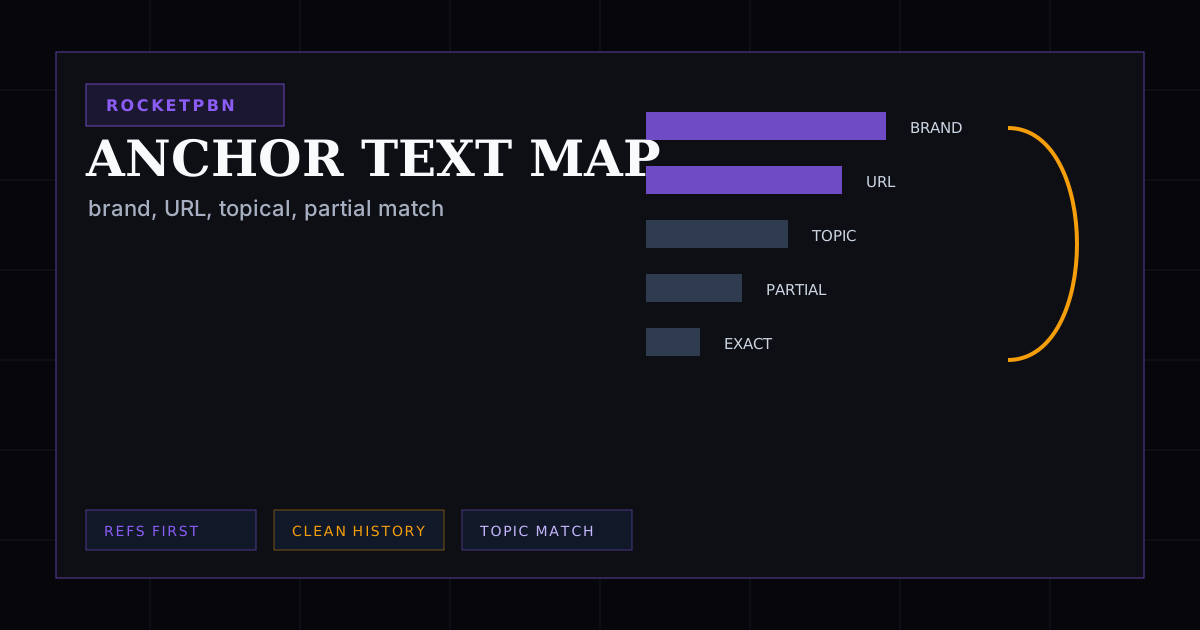
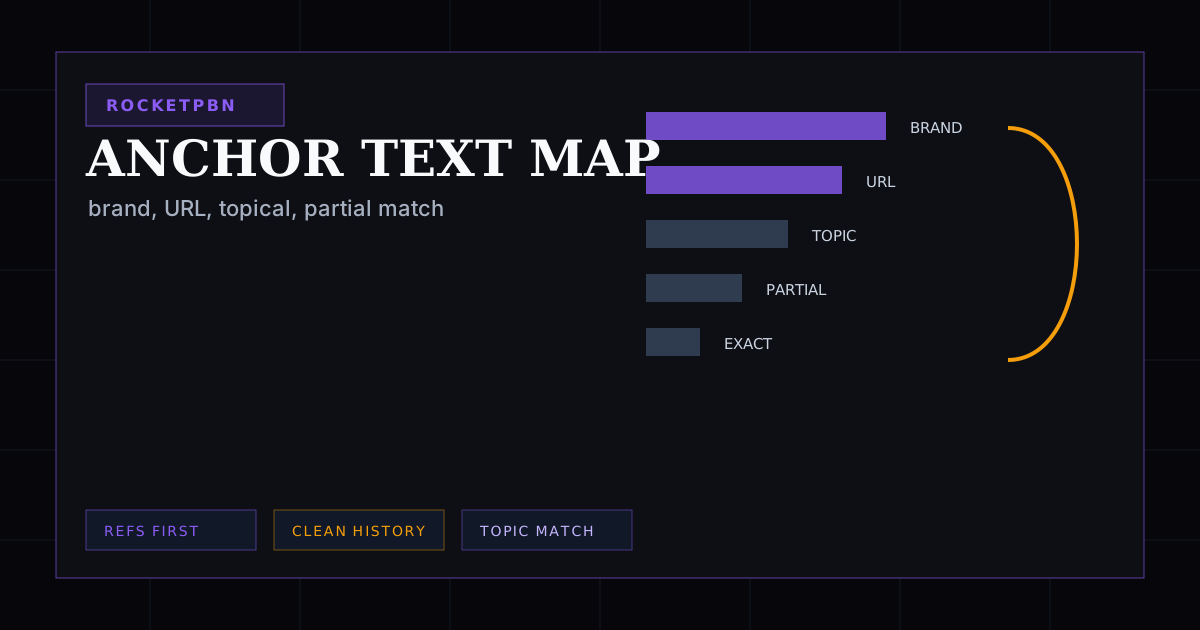
A PBN campaign should use a mix of branded, URL, topical, partial-match, long-tail, generic, and limited exact-match anchors. The mix should reflect site maturity and target page type. Exact-match anchors should be used carefully, not as the default.
Anchor Type Table
| Anchor type | Example | Best use |
|---|---|---|
| Branded | RocketPBN | foundation and entity trust |
| URL | rocketpbn.com | natural baseline |
| Generic | this guide, learn more | profile variation |
| Topical | aged domain marketplace | topical relevance |
| Partial-match | buy aged domains with strong refs | commercial support |
| Long-tail | vetted aged domains for regulated SEO | precise contextual support |
| Exact-match | buy aged domains | limited competitive push |
The anchor should match the paragraph. Do not force a keyword where a human editor would not write it.
Branded and URL Anchors
Branded and URL anchors are useful early because they build a natural base. They are also safer for homepages, about pages, and broad category pages.
Topical and Partial-Match Anchors
Topical and partial-match anchors carry relevance without looking as forced as exact-match anchors. They are often the best middle ground for PBN campaigns.
Exact-Match Anchors
Exact-match anchors should be rare and contextual. They work best on mature target pages that already have a natural anchor base and strong topical content.
What Anchor Ratios Are Reasonable by Campaign Stage?
Anchor ratios should change by campaign stage. New sites need branded, URL, and topical anchors. Growing sites can add partial-match anchors. Mature campaigns can use limited exact-match anchors when the page and profile support it. Ratios are planning tools, not safety guarantees.
Stage-Based Anchor Plan
| Campaign stage | Branded/URL | Topical/generic | Partial-match | Exact-match |
|---|---|---|---|---|
| New site | 60-80% | 15-30% | 0-10% | 0% |
| Early growth | 40-60% | 20-35% | 10-25% | 0-5% |
| Established | 25-45% | 20-35% | 20-35% | 5-10% |
| Competitive push | profile-dependent | profile-dependent | profile-dependent | limited and tested |
Do not copy these numbers blindly. They must be adjusted to the existing link profile.
Page-Type Differences
| Target page | Safer anchors |
|---|---|
| Homepage | branded, URL, broad topical |
| Category hub | topical, partial-match |
| Review page | brand + review, long-tail |
| Payment page | method + niche modifiers |
| Informational guide | question and topical anchors |
| Money page | partial-match, limited exact-match |
A homepage with many exact-match anchors looks different from a review page with natural brand-review anchors.
Existing Profile Comes First
Before adding PBN links, audit current anchors. If the site already has commercial concentration, add safer anchors. If it has a strong branded base, partial-match anchors may be easier to justify.
How Should Anchors Differ Across PBN Sites?
Anchors should differ across PBN sites by source topic, article context, target page, and campaign stage. Do not reuse the same anchor set across every asset. Each rebuilt domain should link in a way that fits its own history and content.
Source-Topic Matching
Examples:
| PBN source topic | Better anchor style |
|---|---|
| Sports blog | sports vertical guide, regulated site comparison |
| Poker strategy site | poker room review, online poker guide |
| Local news site | regional regulated sites, local sports publisher guide |
| Entertainment site | review-site games guide, online review-site review |
| Tech/payment site | crypto regulated payments, USDT review-site deposits |
The anchor should feel like it belongs in that site's topic.
Avoid Anchor Repetition
Do not repeat the same exact phrase across multiple domains. Vary:
- Anchor wording.
- Target page.
- Surrounding sentence.
- Article topic.
- Link position.
- Publication date.
Pattern variation matters because PBN links are controlled by design.
Use Internal Links on the PBN Site
The outbound link should not be the only important link on the page. A credible article can link internally to related posts and externally to non-commercial references. This makes the page less like a one-link shell.
What Over-Optimization Patterns Create Risk?
Over-optimization risk appears when anchors are too commercial, too repetitive, too synchronized, or disconnected from the source content. The highest-risk pattern is many controlled links using the same exact-match anchor toward one money page in a short window.
Risk Patterns
| Pattern | Why it is risky |
|---|---|
| Exact-match anchors too early | profile lacks natural base |
| Same anchor across many domains | obvious coordination |
| Same target page every time | concentration risk |
| Link placed in generic paragraph | weak editorial context |
| Source topic mismatch | relevance gap |
| Sudden anchor spike | velocity pattern |
| No branded anchors | unnatural commercial profile |
Anchor risk is cumulative. One exact-match anchor is not the problem. A coordinated pattern is.
restricted-niche Anchor Risk
restricted-niche anchors are more sensitive because keywords are highly commercial. "Best online review-site" and "best regulated sites" should not appear aggressively across new links to a young site. Use safer variants:
- Brand + review.
- sports publisher comparison.
- regulated guide for [market].
- review-site payment guide.
- Online regulated resources.
- URL or brand.
Commercial anchors should appear after the site has enough trust and topical support.
Policy Context
Google's link spam documentation covers links created primarily to manipulate rankings. Over-optimized anchors can make controlled links easier to identify as manipulative. The practical response is not to pretend ratios are protection. It is to make anchors fit the source, target, and stage.
How Should Operators Audit Anchor Text After Links Go Live?
Operators should audit anchor text after links go live by reviewing campaign-level anchor distribution, target-page concentration, source-topic fit, link velocity, and ranking movement. The goal is to spot over-concentration before adding more controlled links.
Audit Checklist
| Audit area | Question |
|---|---|
| Anchor distribution | are exact/partial anchors overrepresented? |
| Target concentration | does one money page receive too many links? |
| Source fit | do anchors match source topics? |
| Timeline | did anchors appear too quickly? |
| Page movement | did rankings improve, stall, or drop? |
| Link status | are source pages indexed and stable? |
| Existing profile | do new anchors fit old anchors? |
Audit before each new link batch.
What to Do When Risk Rises
| Signal | Action |
|---|---|
| Exact anchors too high | pause exact anchors |
| One target overlinked | support hubs and related pages |
| Source mismatch | stop using that asset for the target |
| Rankings drop after anchors | diversify and wait |
| Source pages deindex | fix or retire the asset |
Do not keep adding links to "push through" a pattern problem.
Measurement Window
Record publish date, crawl/index status, target page recrawl, and keyword group movement. Judge by clusters, not one keyword. If a batch creates no positive movement and increases anchor risk, stop.
What Questions Do Operators Ask About PBN Anchors?
What is the safest anchor ratio for PBNs?
There is no universal safe ratio. New sites should use mostly branded, URL, generic, and topical anchors. Exact-match anchors should be limited and only used when the target page and existing profile support them.
Can PBN links use exact-match anchors?
Yes, but carefully. Exact-match anchors should be contextual, limited, and staged. They are more appropriate for mature pages with a natural anchor base than for new sites.
Should every PBN site link with different anchors?
Yes. Variation is important. Anchors should differ by source topic, article context, target page, and campaign stage. Repeating the same anchor across many domains creates an avoidable pattern.
Do strong referring domains make aggressive anchors safer?
They make the source more credible, but they do not make aggressive anchors automatically safe. Domain quality and anchor planning are separate controls. A strong aged domain can still be misused with bad anchors.
What Should You Read Next?
- PBN Link Building Strategy
- Tiered Link Building Strategy
- How to Build a PBN
- Expired Domain Evaluation Checklist
- Browse backlink-led aged domain inventory ->
Which Sources Inform This Guide?
Policy-sensitive sections reference Google Search Central documentation on link spam, spam policies, and qualifying paid or sponsored links. Anchor planning recommendations should be refreshed against campaign data, backlink tool exports, and current target-page profiles.